

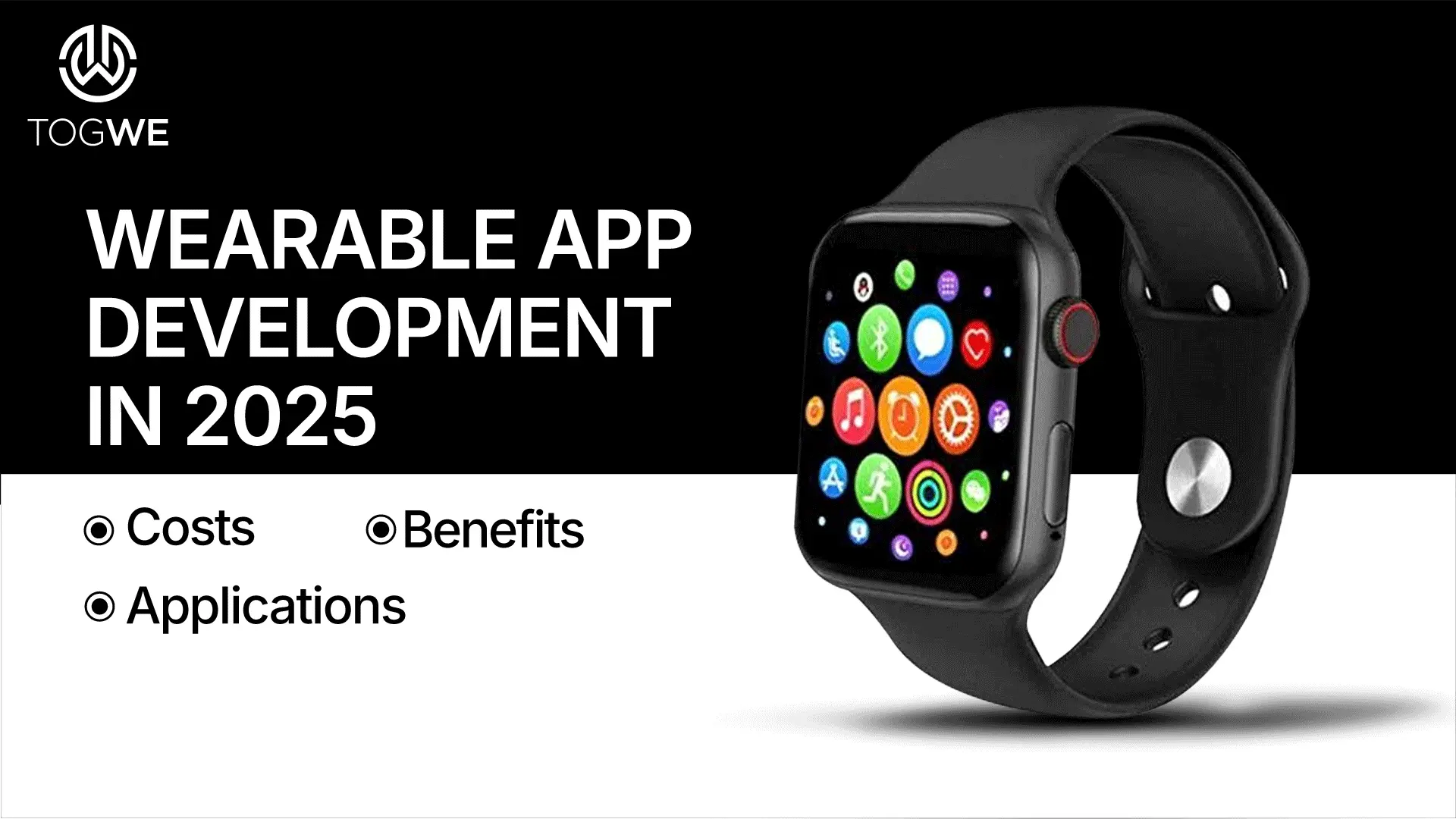
Wearable technology is emerging as a key component of the digital ecosystem. Wearable technology is defined as a software tool that we can wear. It can be in the form of applications in smartwatches, fitness trackers, smart rings, and smart glasses, etc. These devices are helping to monitor our lifestyle, health, and productivity. According to several leading wearable technology reports, the global wearable market is expected to grow strongly in the coming years. This article will be about wearable application development, benefits, applications, price, etc. according to wearable technology 2026.
What is Wearable App Development?
Wearable app development means creating apps specifically designed to work on wearable devices instead of traditional smartphones. These apps typically focus on:
- real-time tracking
- quick interactions
- sensor- based features
- smaller screen UI
- lightweight processing
Examples: Wear OS(Google), WatchOS(Apple), Fitbit OS, and custom OS for medical OR IoT devices
Development Cost in 2026
Different sources on the web suggest that the cost of wearable apps depends on:
- type of wearable device
- number of sensors used
- UI/UX complexity
- real-time features
- cloud backend
- data security
- testing and maintenance
- Estimated Cost Range
- Type of wearable app
Estimated Cost:
- Basic functionality (simple tracking, notifications) : $10,000 – $30,000
- Medium complexity with sensors: $30,000 – $70,000
- Advanced AI / medical grade:$75,000 – $200,000+
Applications that use artificial intelligence, advanced data analytics, or medical-grade monitoring require greater investment due to security, backend development, and compliance.
1.Real-Time Monitoring
Wearable smartwatch technology is under development to collect health, activity, and location data using built-in sensors.
2.Hands On Experience
Users receive important updates without opening their smartphones.
3.Personalization
Smart algorithms, machine learning, and analytics help personalize fitness and healthcare suggestions.
4.Improves Health and Lifestyle
Nowadays smartwatches are tracking your fitness, heart rate, pulse rate, etc. They help in analyzing and understanding our health and then we can improve our health according to their data.
5.Industrial and Workplace Usage
Wearables can improve work safety, productivity, and equipment monitoring in industries.
Most Popular Application of Wearable Technology in 2026:
Fitness and wellness
Step counting, heart rate monitoring, calories, exercise and sleep analysis.
Healthcare and medical
Chronic disease monitoring, ECG tracking, blood pressure, emergency alerts, and elderly care.
Safety Applications
Fall detection, emergency SOS, real-time alerts, and outdoor activity tracking.
Lifestyle and Convenience
Smart notifications, reminders, voice assistance, and smart-home control.
Enterprise and Industrial Use
Workforce safety, operations monitoring, IoT integration, logistics, and asset tracking.
Future of Wearable App Development
According to several industry reports, future wearable solutions will combine:
- AI
- cloud computing
- predictive analytics
- advanced sensors
- personalized medical insights
Wearable technology is expected to become a key part of smart healthcare, remote medicine, workplace management, and improvements in everyday lifestyles.
AI Used in Wearable Applications (2026)
Artificial intelligence is increasingly becoming the main technology behind wearable applications. Wearable devices (such as; smartwatches, fitness trackers, smart rings) collect real-time data such as heart rate, sleep duration, oxygen levels, body activity type and movement patterns. AI is helping in the analysis and this is very helpful for understanding and visualization. Let’s understand with the example of a fitness tracker. There is a man and he is overweight and he wants to lose his weight and stay fit. So he needed a proper analysis. Then the fitness tracker will help him. The fitness tracker will show you how much you have walked and how many calories you have lost and how much more you have to walk. Through this analysis, the man can easily reduce his weight.
Machine learning which is an important part of data science and AI is used in wearable applications to detect changes in health and predict potential risks and respond with automatic alerts if any. With this prediction of wearable applications, you can easily decide what you should do to treat it. Examples include irregular heartbeat detection, fall detection, sleep stage analysis, a future platform for personal and medical use.
Challenges in Wearable Applications Development
Battery optimization is one of the most important challenges in wearable application development. Wearable devices use small batteries, so it is a big concern for power consumption. Because it constantly runs background sensors such as heart-rate, accelerometer, GPS and Bluetooth. Now I will tell you the solution and how to fix it. If the developer uses low-power API, energy-efficient sensor algorithms and background execution limits to reduce battery consumption. Some technologies such as Bluetooth low energy, optimized display brightness can significantly improve battery performance. Therefore, power efficiency plays an important role in making wearable applications practical for daily use.
Read More: What Is Vertex AI? How It Works, Advantages, and More
Conclusion
Wearable app development is one of the hottest technology sectors in 2026. With rising consumer demand, healthcare adoption, and continuous improvements in sensors and connectivity, companies are investing more in wearable solutions. The combination of health, AI, and mobile platforms makes wearable development a future-ready technology sector for both businesses and new app developers.
![List of Brands Endorsed By Yuvraj Singh [2026 Updated]](https://www.togwe.com/backend/wp-content/uploads/2026/03/brands-endorsed-by-yuvraj-singh.webp)
![List of Brands Endorsed By Paul Pogba [2026 Updated]](https://www.togwe.com/backend/wp-content/uploads/2026/03/brands-endorsed-by-paul-pogba.webp)